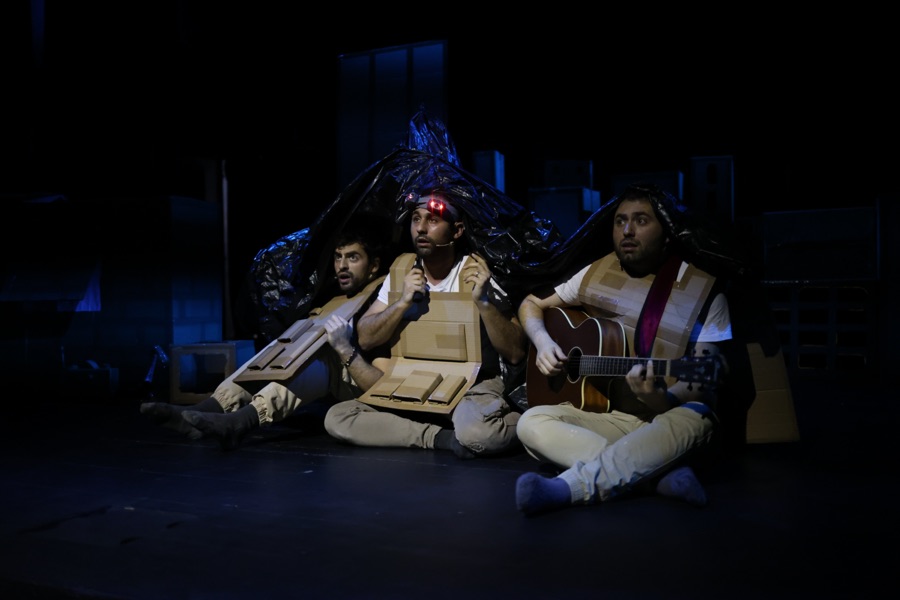
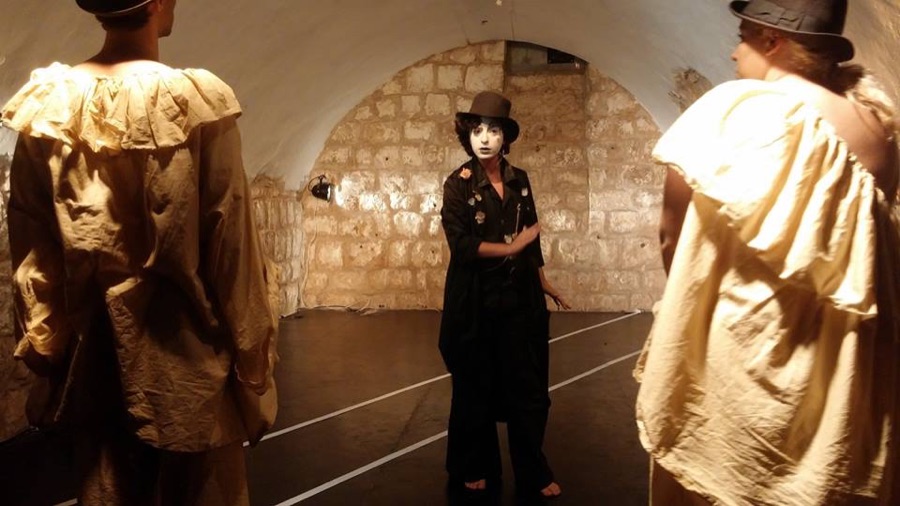
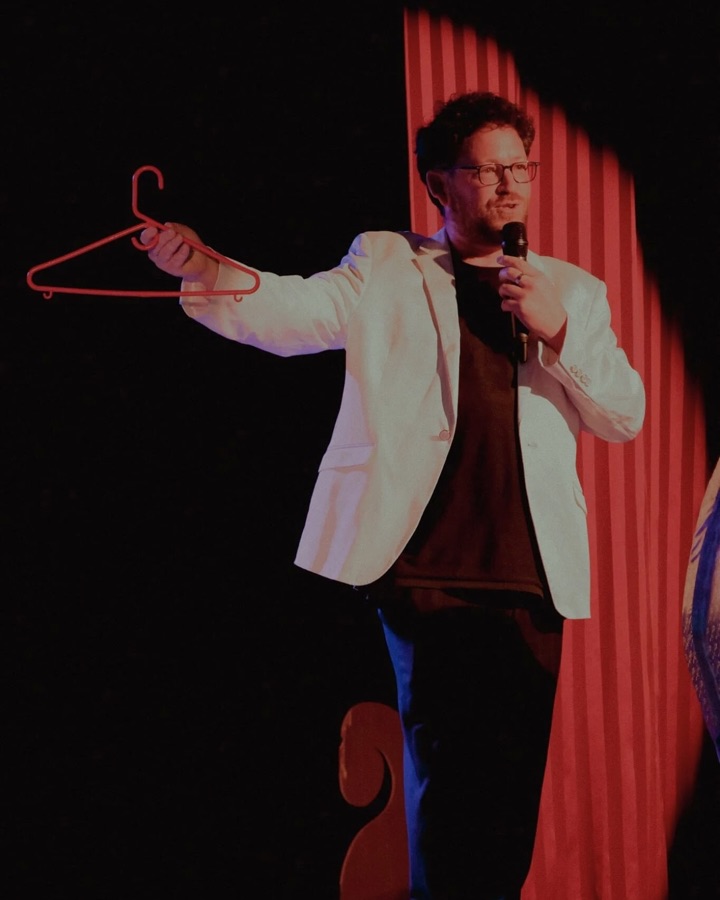
Mikro Theater is a Jerusalem fringe theater, operating as a professional, independent company since 1994 and recognized by the Ministry of Culture since 2004. The theater was founded by Irina Gorlik, who continues to direct here to this day, and operates under the artistic direction of Yefim Rinenberg and the management of Nir Segev. From its earliest days, Mikro has worked from the belief that a theater isn't just a venue for performances, but a creation house — a place where people work, live, and make theater as a tool for processing reality.
30+Years Active
100+Shows & Projects
1994Founded
∞Jerusalem
History
Three Decades of Theater
1994
The Founding. Our story begins in Jerusalem in the mid-1990s: one room, a group of teenagers. Irina Gorlik, a theater artist who immigrated from Saratov, opens a Russian-language acting course in the Gilo neighborhood for young people among immigrants from the former Soviet Union. One shared language, and a group that found a home in theater. One of them is Yefim Rinenberg. That's how we were born — small, and close.
1999
From a Room to a Theater. The course didn't stay a course. A weekly meeting became daily work, and acting classes became work on full productions. We grew, and the theater grew with us: five shows in our first five years, the last of which — "A Midwinter Night's Dream" — was the moment we became a theater, not just a group. This is where the belief that has stayed with us ever since took shape: that size isn't an advantage, and that smallness — few people, deep familiarity, long commitment — is a source of strength, not something given up. The Jerusalem Municipality gave us a public bomb shelter on Yosi Ben-Yoezer Street; the shelter became a rehearsal room, and later — a home.
2004
Recognition and a Move. After a decade of guerrilla work, the Ministry of Culture recognizes us as a professional theater. It's also time to part with our beloved shelter: the Khan Theatre opens its gates to us, and we move to work out of the small Khan.
2014
A Home of Our Own. A decade of work and creation ripens into a move to the Jerusalem Theater — into a hall designed specifically for us. Sasha Lisniansky z"l, a great designer and artist, redesigned the legendary Tel-Ad studios and turned them into a hall built to our own measure: an intimate space, where the distance between actor and audience is almost erased.
2022
The Next Generation. Nearly three decades after that first course in Gilo, Yefim Rinenberg — who grew up in it and became a theater and film actor, director, and acting teacher — steps into the role of artistic director. Irina Gorlik remains with us as principal director.
Our Method
The Ensemble as Laboratory
In every piece of work, we return to Mikro's founding question: what is Jewish theater in Jerusalem, here, now? Our work rests on the tradition of studio theater, which sees the actor as a creative partner, and operates through an ongoing working process that includes physical and vocal work, text analysis, improvisation, and dramaturgical thinking.
From this outlook, we've developed over the years an artistic voice engaged with existential and historical questions, drawing its material from the best of literature — Meir Shalev, Isaac Bashevis Singer, Thomas Mann, Stefan Zweig, Nathan Alterman, and many others.
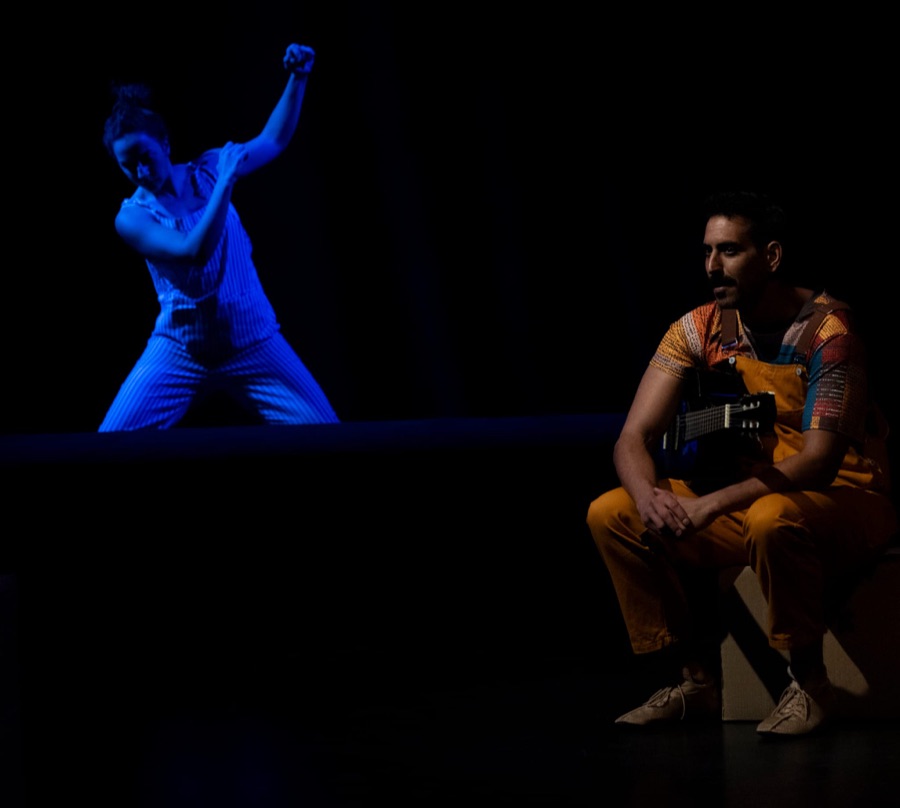
Alongside Stanislavski, we also draw on Meyerhold's biomechanics — a theater that begins from the body and from research, not from direction. Our rehearsals are a laboratory: the actor doesn't perform a text but creates it, and from the long work of the whole room an original stage interpretation is born — one grounded in deep fidelity to the text, but unafraid to take it apart. And alongside the word, our tools of expression are wide: dance, live music, video, shadow and puppet theater, masks, and stage illusion.
Place
Jerusalem as Material
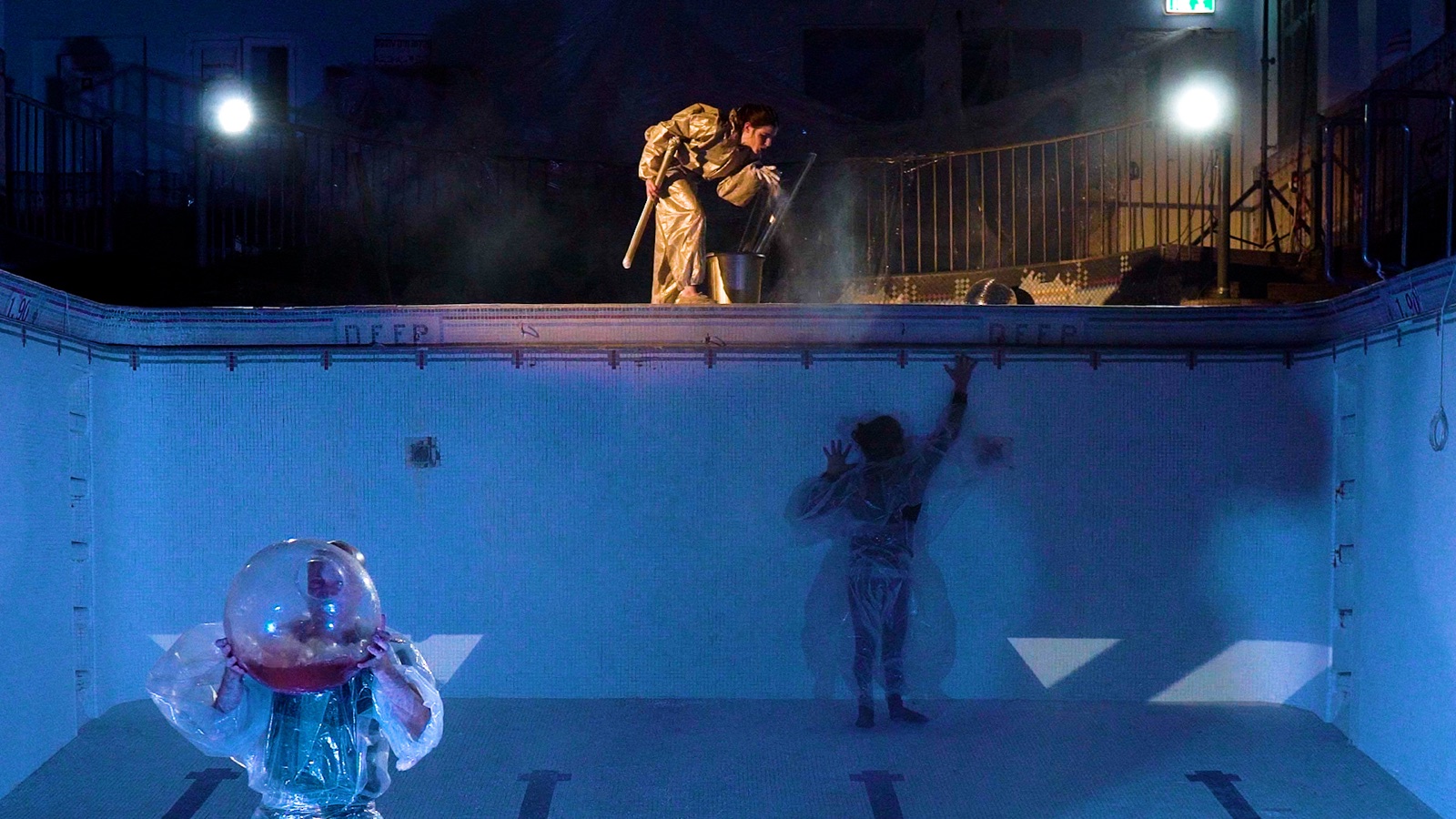
From Songs of the Plagues of Egypt, at the legendary YMCA pool
We see Jerusalem as a living creative space, not just a backdrop. We've built expertise in site-specific work that carries on a dialogue with the city's architecture and history — in ancient burial caves, in plazas, in hotels and bars.
"Jerusalem, in all its complexity, is the right place to attempt this."
At each site, the piece is built anew — mise-en-scène, design, and video are born out of a dialogue with the space itself. This isn't a technical workaround for a company without a hall; adapting to each place is part of the work, and it demands reinvention every time.
Leaving the hall is also a way of going out to the audience. We go to where people already are, and meet viewers who don't always come to the theater — searching for a language that skips past cultural, social, and linguistic barriers. After every show, we stay for a conversation. Here, the audience doesn't watch from the sidelines — they're a partner in the moment.
More than three decades after we were founded, we at Mikro continue making theater in this city from that same original belief: that the art of the stage is a way to observe reality and process it; that every show is a renewed attempt to touch something real; and that Jerusalem, in all its complexity, is the right place to attempt this.